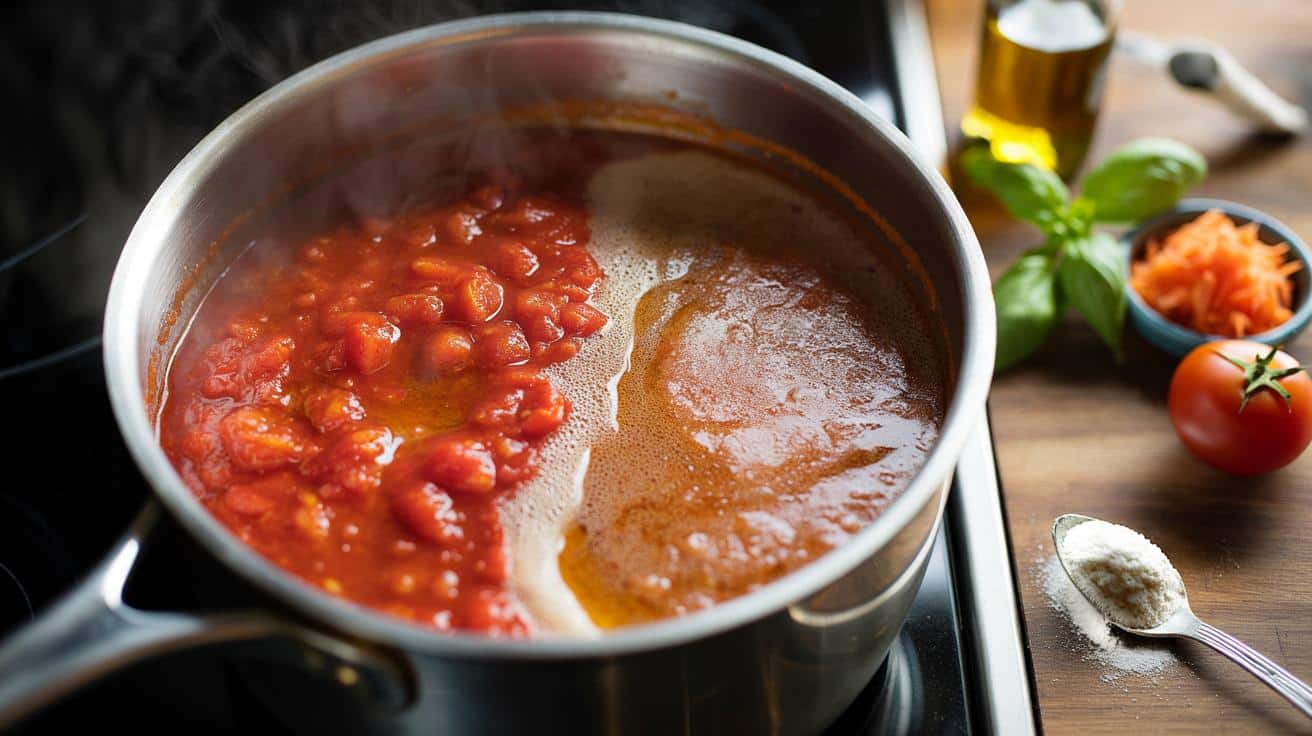
The kitchen was noisy in that soft, domestic way: a low simmer, the tick of the extractor fan, a teaspoon knocking the side of a pan.
On the hob, a pot of tomato sauce bubbled, deep red and slightly angry, spitting to the rhythm of a football commentary in the next room. Someone leaned in, spoon in hand, tasted it, and winced. Too sharp. Too tangy. Almost metallic. They reached for the baking soda the way you reach for painkillers after a rough night.
A tiny pinch, barely half a teaspoon, fell into the sauce. There was a small hiss, a moment of fizzing, like something alive was being calmed. Another taste. The bite had gone. The harsh edge was tamed, replaced by something softer, rounder, safer. Everyone at the table would like this version more. It felt like a success.
Then they noticed the colour.
When a pinch of baking soda quiets the tomato… a bit too much
On the stove, that same sauce had shifted almost without anyone seeing it. What was once bright, almost glowing red had turned a little dull, edging towards brick. The aroma changed too. Less vibrant, less “tomatoey”, like the volume had been turned down on the whole thing. The sauce was smoother, yes, but it suddenly tasted like it had been cooked yesterday and reheated, rather than made fresh that afternoon.
This is the trade-off that quietly happens in kitchens all over the place. That tempting box of bicarbonate of soda can turn a harsh, lip-puckering tomato sauce into something gentle enough for a child’s plate. Yet each pinch steals some of that brightness we secretly love in tomatoes. You fix the sting, and you lose some sparkle. It feels like choosing between comfort and character, every single time you stir.
On a weeknight, many cooks go for comfort. They don’t always realise the deal they’ve just made with the chemistry in their pan. Baking soda doesn’t only cancel acidity. It nudges the whole flavour balance, and the colour tags along. Once you see it, you can’t unsee it.
Think of a fresh tomato straight from the fridge in late summer. Juicy, clean, slightly sharp in a good way. That bite is part of what makes it feel alive. Now imagine the same tomato cooked low and slow, then softened with baking soda. The acidity falls, but so does that crackling feeling on your tongue. The result leans towards soup from a carton: friendly, familiar, but missing the buzz that makes you close your eyes for a second.
Chefs talk about this more than home cooks. Some will use a pinch of bicarb for a crowd-pleasing lasagne meant for kids or older relatives. Others refuse it outright, preferring to manage acidity with time, fat or a touch of dairy. They’ll tell you that tomatoes need a little bite to stand up to pasta, cheese and wine. Take out too much acid and the sauce starts tasting flat, even if it’s technically “balanced”.
There’s also the visual hit. Tomato pigments, those carotenoids that give you that deep red glow, behave differently in a more alkaline environment. Add baking soda, and the pH shifts fast. The colour can drift from vivid red to brownish-red, especially if the sauce keeps simmering. It’s subtle, but on a white plate, under warm kitchen lights, it looks just a shade more tired. Your taste buds pick that up even before your fork hits your mouth.
Chemically, it’s simple: tomatoes are naturally acidic, and baking soda is alkaline. Mix the two and you get a neutralising reaction. The acid molecules in the sauce meet the bicarbonate, carbon dioxide is released (that tiny fizz you sometimes see), and the overall acidity drops. Your tongue picks that up as less sharpness, less tang, less of that tight feeling along the jawline when a sauce is very sour.
➡️ Finding gold while digging a pool raises one legal question that decides everything
➡️ Place a single ice cube on your orchid once a week and watch the blooms return
➡️ Baking soda under-eye hacks: the irritation risk nobody mentions and safer options
➡️ How emotional expectations shape disappointment more than actual events
➡️ Foil behind radiators: the installation angle that determines whether you save anything at all
➡️ Perfume fades faster on some people for a biological reason unrelated to skin type
➡️ Orcas near ice shelves: what researchers track that signals real behavior change
That’s not the whole story, though. Acidity doesn’t just make things taste sour; it lifts flavours, sharpens aromas, and gives structure to everything else in the dish. When you neutralise too much of it, your sauce might taste smoother but also strangely muted. Think of it as removing the treble from a piece of music: the bass is still there, but the song feels heavy and slow. Tomatoes without enough acidity behave the same way.
There’s also a knock-on effect on the way we perceive sweetness. Lower acidity often makes a sauce feel naturally sweeter, even if you haven’t added sugar. That can be useful, yet it means your sauce might taste a bit one-note if the acid has been flattened out too far. On top of that, the colour chemistry shifts, as those tomato pigments sit in a less acidic bath. The science is neat. The flavour can be less so.
How to tame tomato acidity without killing the glow
If you still want that little lifesaver moment with baking soda, treat it like a scalpel, not a hammer. Start with the smallest pinch you can manage between two fingers, stir it in thoroughly, and wait a solid minute before tasting again. The reaction isn’t instant. Let the sauce settle and keep it at a gentle simmer rather than a rolling boil, so you’re not pushing the colour further towards brown.
Try tasting your sauce at three stages: soon after adding tomatoes, halfway through cooking, and near the end. Only reach for baking soda after you’ve given time, slow heat and a splash of fat (olive oil, butter or a bit of cream) a chance to round the acidity. Sometimes, twenty more minutes at a low bubble does more for harsh tomatoes than any white powder. When you do add baking soda, stop as soon as the sauce moves from painful to pleasant. Don’t chase “totally neutral”.
On days when you use cheap canned tomatoes or out-of-season fresh ones, pair the tiny dose of baking soda with a brightness boost at the end: a spoon of tomato paste fried in oil, a drizzle of good olive oil, or a handful of fresh herbs. That way, the soda deals with the aggression, while those finishing touches bring back some energy and colour to the plate. Two small moves, one in the middle of cooking and one at the end, can change everything.
Many home cooks go straight to baking soda because someone online said it’s a “chef trick”. Then they wonder why their sauce tastes oddly quiet. A softer way is to use other tools before that box of bicarb even comes out of the cupboard. Long, gentle cooking evaporates harsh volatile acids. A carrot grated into the sauce adds natural sweetness that rounds edges without flattening the whole profile. A splash of milk or a knob of butter brings richness and softens your perception of sharpness.
We’ve all met that person who throws in a full teaspoon of baking soda because “that’s what Grandma did”. The result is often a pale, slightly foamy sauce that smells faintly like school canteen bolognese. If you’ve done this, you’re not alone. On a tired weeknight, shortcut habits kick in and nobody wants to argue with a pot of tomatoes. *But recipes from another era were dealing with different tomatoes, different tins, different levels of ripeness.*
Soyons honnêtes : personne ne fait vraiment ça tous les jours. The everyday win is learning when baking soda is actually the right solution, and when your sauce just needs patience, a pinch of salt, or an extra glug of olive oil. Once you taste the difference between “neutralised” tomato and “balanced” tomato, you start to change the way you cook, almost without thinking about it.
“A tiny pinch of baking soda can rescue a sauce that’s painfully sharp, but more than that and you’re not fixing tomatoes anymore, you’re rewriting them,” says one London chef who quietly banned bicarb from his kitchen line.
That idea – rescue, not rewrite – is the line to hold in your own kitchen. Use baking soda as an emergency lever when the tomatoes are just wildly out of control. When they’re only slightly testy, reach for patience and technique first. A lid half-on to trap steam, a stir every few minutes, and time doing its slow work. The sauce thickens, sugars concentrate, acids mellow naturally. You’ll taste more layers. The colour will stay confident.
Here are simple moves that keep acidity in check without draining the life out of your tomatoes:
- Add a small amount of grated carrot for sweetness rather than sugar.
- Cook tomatoes longer at low heat before adding delicate herbs.
- Finish with a drizzle of good olive oil to lift flavour and shine.
- Use a tiny pinch of baking soda only as a last resort, and taste between each pinch.
- Brighten at the end with a splash of fresh tomato, vinegar or lemon if things taste flat.
Living with a little tang in your tomato
There’s a quiet pleasure in accepting that tomatoes are meant to be a bit feisty. That edge is part of what makes spaghetti al pomodoro or a simple pizza sauce cut through all the carbs and cheese. When you hold back on the baking soda, you leave space for that light tension on the palate. A sauce with a gentle tang asks you to pay attention. It makes each forkful feel slightly alive, instead of just soft and comforting.
Once you start noticing how baking soda changes the colour as well as the taste, you begin watching your pot differently. The shift from vivid to muted becomes a kind of signal. It’s not “wrong”, but it tells you something about the choices you’ve made. Some days, a mellow, brownish-red sauce that offends no-one is exactly right. Other days, you want those bright splashes of red, the sauce that practically shouts from the plate.
Sharing that awareness – between friends at dinner, in family group chats swapping recipes, in small kitchen arguments over the hob – is how these tiny tweaks spread. One person says, “Next time, try half as much baking soda and finish with olive oil instead.” Someone else realises the sauce tastes more alive, even if the acidity never fully disappears. These are the little moments that change everyday cooking, quietly, pan by pan.
| Point clé | Détail | Intérêt pour le lecteur |
|---|---|---|
| Baking soda lowers acidity fast | Neutralises tomato acids, softening sharp flavours in minutes | Permits quick fixes when a sauce tastes painfully sour |
| Brightness and colour also drop | Alkaline shift dulls red pigments and flattens fresh, tangy notes | Explains why some “rescued” sauces taste and look tired |
| Small doses and timing matter | Use tiny pinches late in cooking, paired with fat and fresh touches | Helps keep balance: gentle sauce without losing tomato personality |
FAQ :
- Does baking soda completely remove tomato acidity?It lowers acidity significantly, but rarely removes it entirely unless you use too much, which often leads to a flat, soapy taste and dull colour.
- Is it better to add sugar or baking soda to sour tomato sauce?Sugar masks acidity by adding sweetness, while baking soda neutralises the acid itself; many cooks use a tiny bit of each rather than relying heavily on one.
- Can baking soda make tomato sauce taste bitter?Yes, if you add more than a pinch or two, the alkaline flavour of the soda can come through and create a slightly bitter, off taste.
- When should I add baking soda during cooking?Add it late in the cooking process, after the sauce has simmered and reduced, so you only correct the remaining harshness, not all the natural tang.
- How do I keep tomato brightness if I use baking soda?Use the smallest pinch possible, then restore vibrancy with good olive oil, a touch of tomato paste, fresh herbs, or a final splash of fresh tomato or light acid.