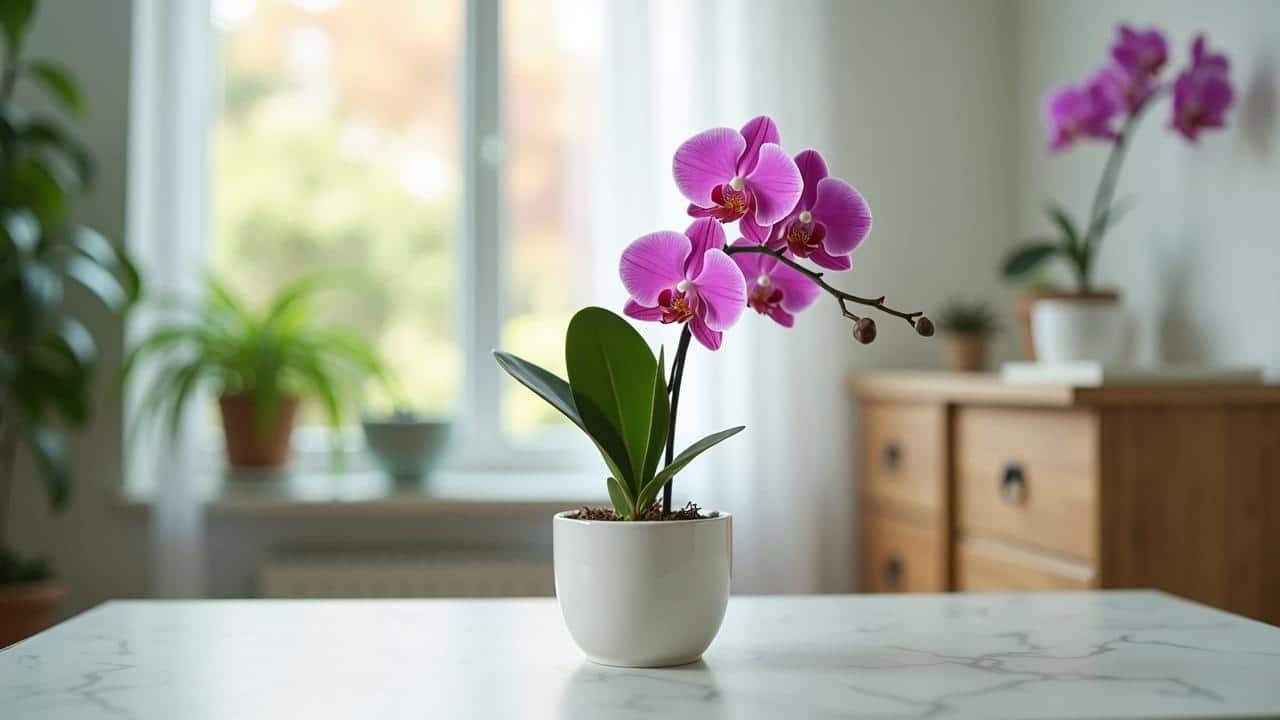
The orchid was doing that sad supermarket-plant thing.
Two stubborn leaves, one yellowing at the edge, the flower spike long gone, leaning over the windowsill like it had given up on life. You know that awkward pause when guests say, “Oh… you had an orchid?”
One rainy Tuesday, I watched a neighbour do something that looked almost wrong. She opened her freezer, popped out a single ice cube, and set it carefully on the bark at the base of her orchid. No measuring jug. No plant app. Just one lonely cube.
“Once a week,” she shrugged. “That’s it. The flowers come back.”
I laughed then. Three weeks later, I wasn’t laughing.
Why one frozen cube can wake a ‘dead’ orchid
At first glance, the ice cube trick sounds like one of those viral hacks destined for the same drawer as banana-peel fertiliser and talking to your plants in French. Yet something about the ritual is strangely calming. Open freezer. Place cube. Walk away. No drama, no guilt, no “Did I drown it?” anxiety.
Orchids, especially the classic supermarket phalaenopsis, are drama queens about water. Too much and the roots suffocate. Too little and the buds shrivel. The tiny dose of slowly melting water does something your hurried splash from the tap rarely manages: it gives the plant time to breathe while it drinks.
That’s the quiet magic behind the cube sitting there, sweating on the bark like a forgotten drink.
A few months back, a reader from Leeds sent me photos I had to zoom in on to believe. Week one: a limp orchid, pot lined with dust, leaves dull and flat. Week four: a thick green root pushing up, silver skin gleaming. Week eight: two fat buds like buttons on a coat, ready to burst.
Her routine? Three months of “lazy care”: one ice cube, same morning every week, placed gently away from the leaves. No repotting. No fertiliser. No special grow lights. Just patience and that dull clink of freezer tray against mug.
She told me the plant had been a gift from her mum, bought years earlier, back when hospital visits filled more days than weekends away. When the blooms returned, she wrote, “it felt like the room exhaled”. That’s the thing about orchids: they so often hold stories far heavier than their stems.
➡️ Perfume fades faster on some people for a biological reason unrelated to skin type
➡️ Baking soda under-eye hacks: the irritation risk nobody mentions and safer options
➡️ Finding gold while digging a pool raises one legal question that decides everything
➡️ He hid an AirTag in his donated sneakers and tracked them to a surprising location
➡️ Orcas near ice shelves: what researchers track that signals real behavior change
➡️ Tomato acidity drops with baking soda but so does brightness
➡️ How emotional reactions can be shaped by tone more than content
So why would this chilled ritual work at all? The logic isn’t mystical. Orchids grown in bark or moss don’t want to sit in a puddle. Their roots are designed to cling to trees in the wild, catching light, air and tiny drops of water. A big weekly glug from the tap often ends up trapped in the bottom of the pot, where unseen roots start to rot.
An ice cube melts slowly, delivering about 20–30 ml of water over an hour or so. That gives the bark time to absorb moisture without becoming a swamp. The roots get a steady drink, not a flash flood. *Think of it less like a bath and more like a long sip.*
There’s also the human factor. You might intend to water “lightly twice a week”. Then life happens. Emails. Kids. Trains that are late again. A once-a-week cube is easy to remember, almost like a tiny ritual stitched into your routine.
How to use the ice cube trick without killing your orchid
Here’s the bare-bones method most growers who accept the ice-cube approach quietly follow. Once a week, take one ordinary ice cube from your freezer. Not a giant cocktail block, not a flavoured cube from last summer’s sangria. Just standard size, plain water.
Place the cube on top of the potting medium, near the centre but not touching the orchid’s leaves or crown. Let it sit and melt on its own. No need to crush it, no need to move it. Walk away and let gravity and time do the slow work your rushed schedule doesn’t.
If your pot is bigger or has several stems, you can go up to two or three cubes, spaced apart. For a typical supermarket orchid? One cube is plenty to start.
Here’s where things get real. The ice cube hack isn’t flawless, and not every plant will thank you for it. Some growers hate the idea of “chilling” tropical roots. In most home tests, the water warms as it melts, and the roots barely feel icy, but still—listen to your plant. If the leaves wrinkle or shrivel, it may need a touch more water or a warmer method.
Avoid home-made cubes with high mineral content if your tap water is very hard. Over time, this can leave white crusts on the bark and stress the roots. Many orchid fans quietly switch to filtered or boiled-and-cooled water for their cubes, especially if they’ve lost plants before.
And be kind to yourself if you forget a week. Soyons honnêtes : personne ne fait vraiment ça tous les jours.
“I tell new orchid owners: the ice cube isn’t magic, it’s a measuring spoon,” says an indoor-plant specialist I spoke to in Manchester. “The real magic is consistency. The cube just makes that easier for busy people who still want something beautiful on the windowsill.”
For readers who like a simple cheat sheet, here’s a quick snapshot:
- Start with one cube per week for a standard phalaenopsis orchid.
- Place the cube on the bark, never jammed against the plant’s crown.
- If roots turn mushy or black, pause the cubes and let the pot dry out.
- If leaves look limp but roots are firm and green, add a second cube next time.
- In a very cold room, use room‑temperature water instead of ice and copy the same small quantity.
The trick isn’t about being perfect. It’s about giving both you and the orchid a chance to meet halfway.
What the ice cube ritual really changes – for you and the plant
Every small domestic ritual rewrites the room a little, and the ice cube is no different. There’s something quietly grounding about opening the freezer and doing this small, almost ridiculous act of care. It lasts seconds, yet it says: this living thing is still part of my week.
On a practical level, the cube can reset a relationship with a plant many people have quietly written off as “finished”. Instead of staring at bare spikes and feeling vaguely guilty, you’re doing something measurable. Over a few months, that often shifts how you see the plant: not as decor, but as a slow companion.
We have all lived that moment where a plant fails and it feels like a verdict on our ability to nurture anything at all. That’s heavy baggage for a £9 orchid from the supermarket. A tiny, repeatable trick like this softens the stakes. You’re allowed to try again, gently, once a week.
When new buds appear – and often they do – it rarely feels like a gardening win. It feels like proof that small, almost invisible acts add up. One cube, once a week, repeated quietly in the background of busy days.
| Point clé | Détail | Intérêt pour le lecteur |
|---|---|---|
| Dosage simple | Un cube standard = environ 20–30 ml d’eau lente | Évite le sur-arrosage sans devoir mesurer |
| Rituel hebdomadaire | Une seule action, le même jour chaque semaine | Réduit la culpabilité et facilite la régularité |
| Observation des signes | Feuilles, racines et nouvelles pousses comme indicateurs | Apprend à “lire” l’orchidée au lieu de la subir |
FAQ :
- Doesn’t the cold from the ice damage orchid roots?In most household conditions, the ice melts quickly and the water warms before it reaches deeper roots. If your home is very cold, copy the volume using a small shot glass of room‑temperature water instead.
- How long until I see new flowers after starting the ice cube routine?Orchids work on their own timetable. Many people see signs of new roots or leaves within 4–8 weeks, and new flower spikes anywhere from 3–9 months later, depending on light and overall health.
- Can I use flavoured or cloudy ice cubes from my freezer?Stick to clear, plain water cubes. Flavours, sugars or high mineral content build up in the potting mix and can stress or burn delicate roots over time.
- Is the ice cube trick suitable for all orchid types?It’s mainly used for phalaenopsis (moth orchids), the common supermarket variety. More sensitive or rare species often prefer careful room‑temperature watering without ice.
- What if my orchid is already severely overwatered and roots are mushy?Pause the ice, repot into fresh, airy orchid mix, trim dead roots and let the plant dry slightly. Once it stabilises and new roots appear, you can reintroduce the small, weekly water dose if it suits your routine.